AS/NZS 3551 Medical Testing – Analyser vs PAT Tester: where to start?
What Appendix B actually requires
AS/NZS 3551 Appendix B sets out a specific sequence of electrical safety tests, each with defined methods and limits. The standard recommends testing in this order: visual inspection, protective earth, insulation resistance, touch current, earth leakage current, patient leakage current, and mains contact current (also called mains-on-applied-part). Not every test applies to every piece of equipment — but you need to know which ones do and whether your instrument can actually perform them.
The critical limits to be aware of: protective earth resistance must be under 200 mΩ for plug-in Class I equipment (100 mΩ from the appliance inlet to earthed metal when the cord is removed). Insulation resistance must be above 1 MΩ at 500 V DC. Touch current is limited to 100 µA in normal condition and 500 µA under single fault. And here’s where medical testing diverges sharply from general PAT — patient leakage current for CF (cardiac floating) applied parts must not exceed 10 µA under normal conditions, and just 50 µA with the earth or neutral open. That’s a measurement your standard PAT tester simply cannot make.
The Fluke ESA approach — the full-scope analyser
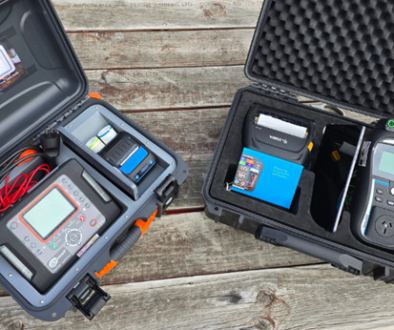
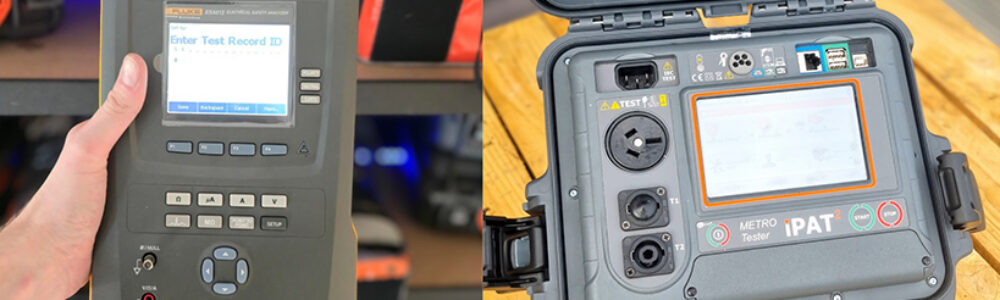
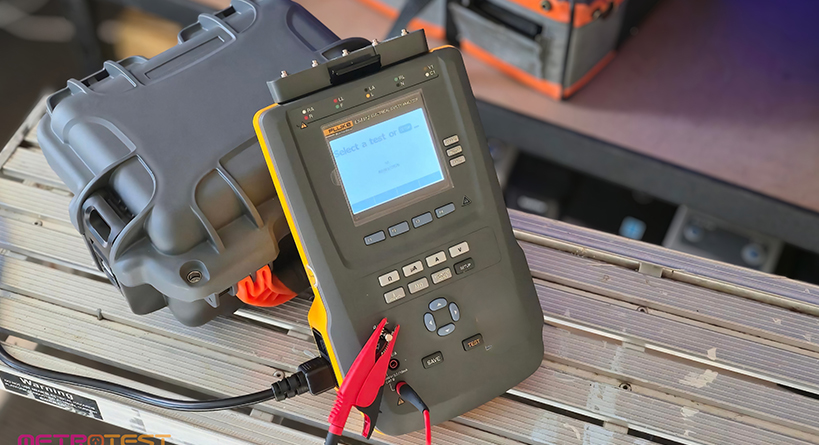
Fluke Biomedical’s ESA range — including the ESA609, ESA615, ESA620, and the newer ESA710 and ESA715 — are purpose-built for medical electrical safety testing. These instruments are designed from the ground up to comply with AS/NZS 3551, IEC 60601-1, and IEC 62353. They incorporate the correct body-model measuring circuit specified in the standards, they can switch between fault conditions (earth open, neutral open, reversed polarity) internally and automatically, they provide dedicated applied-part connections for Type B, BF and CF testing, and they measure leakage currents down to single-digit microamps with the resolution and accuracy the standard demands.
Models like the ESA615 combine a safety analyser and ECG simulator in one portable unit, with on-board automated test sequences that walk you through the correct order of testing. Connected to Fluke’s OneQA or Ansur software, the entire process — from test execution through to documentation — can be fully automated, giving you the kind of traceable, auditable records AS/NZS 3551 requires.
If you’re a biomedical engineering department in a hospital, a third-party medical equipment service provider, or anyone performing acceptance testing, post-repair testing, or routine testing on equipment with CF or complex BF applied parts, this is the tool you need. It’s not cheap, but it’s the instrument that covers the full scope of Appendix B without compromise.
The PAT (iPAT 2) approach — medical-capable PAT testing
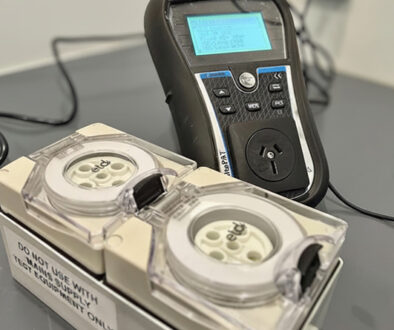
On the other side of the spectrum is the PAT tester approach. The iPAT 2 is a high-end portable appliance tester designed primarily for AS/NZS 3760 compliance work — fast, efficient, with built-in printing, scanning, memory, and asset management features that make it the tool of choice for high-volume commercial test and tag. But with modifications and the right training, the iPAT 2 also includes AS/NZS 3551 medical testing applications, making it a practical option for a specific — and large — category of medical equipment testing.
If you are testing medical equipment in the patient environment that doesn’t have patient-connected applied parts, or has simpler Type B applied parts — think hospital beds, electric hoists, suction pumps, oxygen concentrators, and medical fridges — the iPAT 2 can perform the core Appendix B tests that apply to these devices: visual inspection, protective earth, insulation resistance, and touch current, with also fault conditions with added accessories. For organisations managing large inventories of this kind of equipment across multiple sites, or even hiring medical equipment, the iPAT 2’s speed, tagging workflow, and record-keeping capabilities are a genuine advantage.
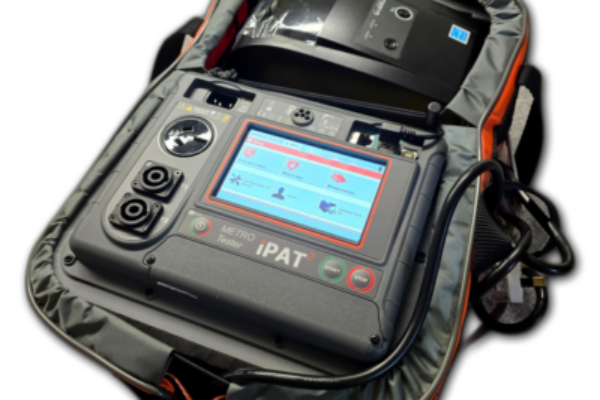
Paired with the right training, the iPAT 2 gives you a fully auditable system with detailed printed tags showing actual test values — not just a pass/fail sticker, but numerical results that can be visually verified during an audit. For medical equipment hire companies, aged care providers, dental practices, and anyone managing simpler medical appliances, this setup covers a significant portion of the testing that Appendix B requires.
Where each tool fits — and where it doesn’t
The practical split comes down to the type of equipment you’re testing and the specific tests it requires under Appendix B.
Use a Fluke ESA or equivalent analyser when: you’re performing acceptance testing of new medical equipment before it enters clinical service; you’re testing after repairs or modifications that could affect electrical safety; the equipment has Type CF applied parts (cardiac monitors, invasive pressure lines, pacemaker programmers); the equipment has multiple or complex Type BF applied parts (patient monitors, infusion pumps, ECG machines); you need to perform mains-on-applied-part testing (which requires a 1:1 isolation transformer with leakage under 5 µA); or your responsible organisation requires full standard-compliant documentation across all test types.
Use a modified PAT tester like the iPAT 2 when: you’re performing routine in-service testing of medical equipment in the patient environment that has no applied parts or only Type B applied parts; you’re managing high volumes of simpler medical devices across multiple sites; you need efficient tagging, asset tracking, and auditable records as part of a medical equipment management programme; you’re a medical equipment hire company testing equipment between hires; or you’re an aged care facility, dental practice, or GP surgery maintaining your own equipment inventory.
The Pros and the Cons
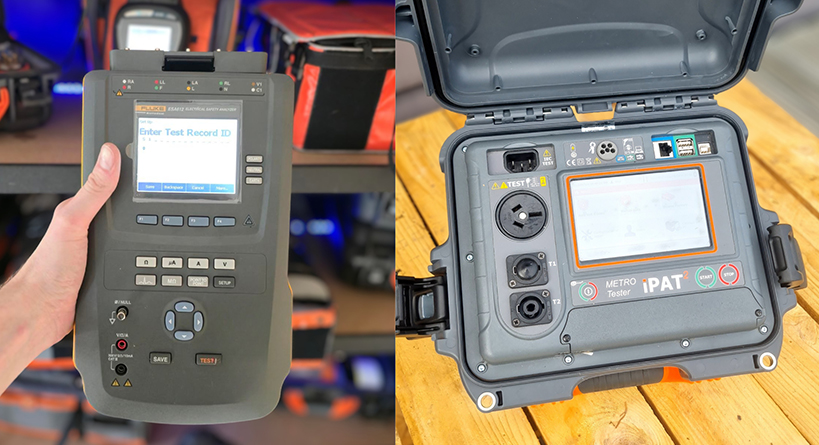
Both systems have their strengths and weaknesses. The Fluke is, in fact, a dedicated medical analyzer, so it will cover everything you need for medical testing. However, if you are interested in doing also AS/NZS 3760 testing you will run into difficulties complying with that standard, especially when it comes to performing testing of polarity on leads.
If you are going to be doing electrical repairs this would also be the way to go. However, it can become complicated for the average user and depending on what model you have like the ESA612 it may not have auto-sequences or require software to run an auto-test sequence, meaning there can be a lot more room for error on the part of the user – a PAT setup is more forgiving to the user.
The iPAT2 was built for the AS/NZS 3760 Standard, however it has been modified with autotest sequence test codes that can’t be done in an incorrect order by the user. Great for the average test and tagger looking to offer more in a specific capacity in accordance with Appendix B. You have a solution that gives you a lot more flexibility across both standards – considerable cost savings.
However, again, it’s not built as a medical tester. For users who need to be able to perform testing after repairs or need to offer in-patient testing for applied parts this isn’t going to meet your complete needs.
Training matters more than you think
Whichever option you use, the person doing the testing needs to understand AS/NZS 3551 — not just AS/NZS 3760. Medical testing requires knowledge of equipment classification (Class I vs Class II), applied part types (B, BF, CF), which tests apply to which equipment, what fault conditions mean and why they’re tested, and how to interpret results against the correct limits. Getting the wrong answer from a medical safety test — either a false pass or a false fail — has real consequences.
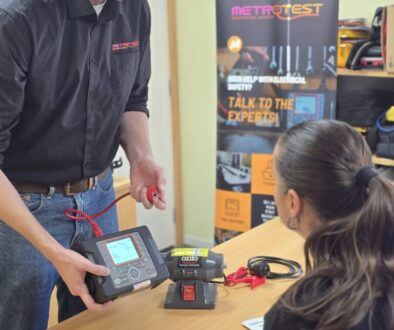
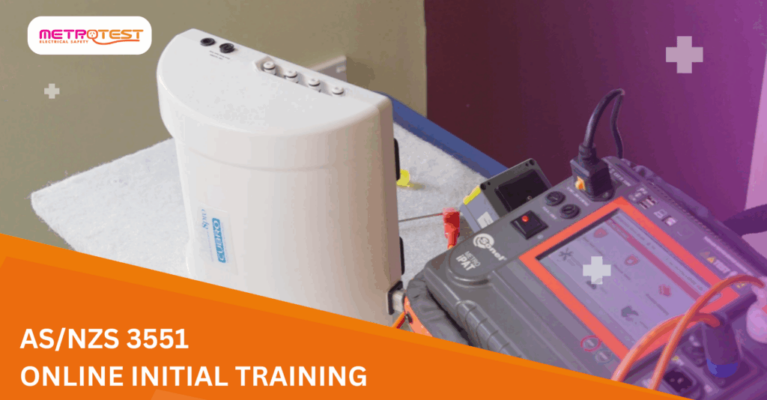
Metrotest offers a dedicated AS/NZS 3551 medical test and tag training course, designed specifically for people who need to test medical equipment in a patient environment. This course is more demanding than the standard AS/NZS 3760 course and has prerequisites around prior testing experience. Once training is complete, the iPAT series testers have been modified to perform the medical tests covered in the training, giving you a complete system — knowledge, equipment, and documentation — from day one.
For those wanting full record-keeping to go alongside their testing, SimplyPATs software lets you download test results, manage your asset register across multiple sites or facilities, produce professional reports, and set reminders for upcoming retests. In a medical environment where auditable records aren’t just nice to have — they’re a requirement of the standard — this is the piece that ties the whole system together.

The bottom line
You don’t necessarily need a $10,000+ electrical safety analyser to test every piece of medical equipment in your facility. But you do need to understand what Appendix B requires for the specific equipment you’re responsible for, and you need to make sure your instrument can actually perform those tests to the accuracy and methodology the standard demands.
For simpler medical equipment — beds, hoists, pumps, concentrators — a properly modified iPAT 2 with the right training gives you a fast, auditable, and practical solution that ensures you have a solution across standards. For equipment with patient-connected applied parts, particularly CF-rated cardiac devices, a dedicated analyser like a Fluke ESA is the only tool that covers the full scope. Many organisations will need both — and knowing which to reach for is the difference between real safety and a compliance exercise.
Need help working out what setup is right for your medical testing? Give us a call today on
0800 638 768 or send us a message at: info@metrotest.training ‘
Safe testing everyone!